The grand finale in Utrecht
Over the past few months, pupils in the final years of primary school explored current digital dilemmas: from AI-fakes to excessive screen time and the constant pull of your smartphone while also wanting to enjoy sports, relax and sleep. Working in teams, the pupils dreamed up their own clever inventions. Yesterday, they headed to the VodafoneZiggo office in Utrecht for the hackathon finale.
Kim Huntjens, Social Impact Manager at Vodafone Foundation, says: “Every day, we work to ensure young people are safe, skilled, and savvy online. Alongside our free Online Masters teaching programme, this hackathon allows us to engage in direct dialogue with the pupils themselves. What do they value most when it comes to their digital wellbeing? After all, they are the experts of their own online and offline worlds."
From cute ‘desk bot’ to smart watch
The finale was a whirlwind of innovation. Ideas ranged from a smart watch that encourages movement through fun play challenges, to a cute desk bot that reminds you of the importance of exercise and time with friends. The jury faced a tough task: how do you pick a winner when every team has come up with such amazing innovations?
Ronald van der Aart, Director of External Affairs at VodafoneZiggo and ‘jury member for a day’, was very impressed: “I’m pleasantly surprised by the variety. These are great, creative proposals that will appeal not just to young people, but to parents and teachers too. The enthusiasm with which the plans were presented was fantastic to see.” What struck him most was the pupils’ approach: “The remarkable thing is that these young people turned to digital tools to achieve a better digital balance. That might feel like a contradiction, but it doesn’t have to be at all.”
The participants already displayed a sharp business mindset, too. One finalist ended their pitch with a cheeky offer to the experts: “While we were working on this, we realized it could be a great fit for your company. So, if you like the idea, we’re open for business!”
And the winner is...
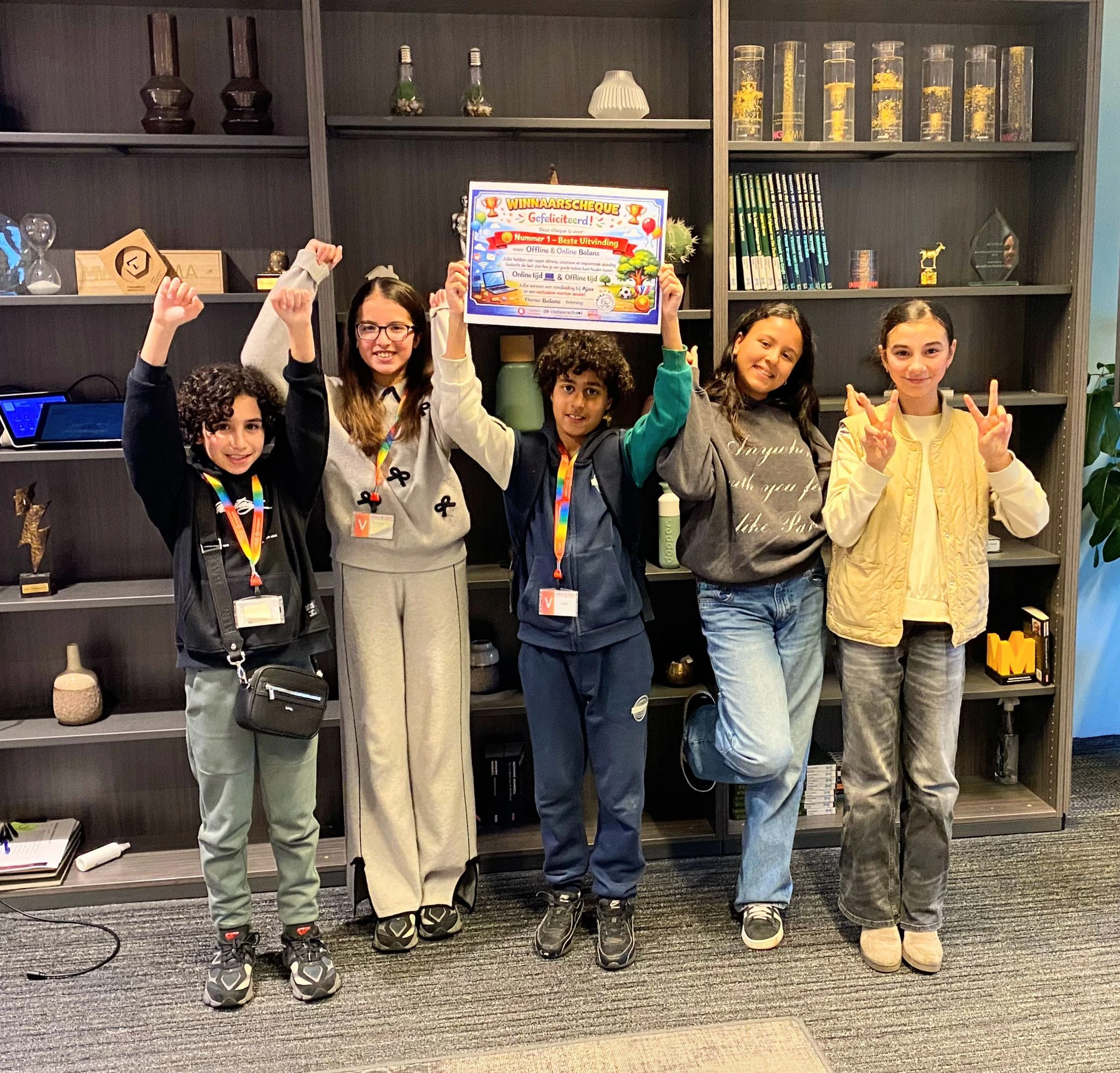
Following a series of impressive pitches, the jury unanimously crowned IBS Elif (a primary school from Amsterdam) as the winners! Their concept? SpeelSlim Buiten (‘PlaySmart Outdoors’). It features a smart card that rewards outdoor play via a check-in/check-out pillar at the playground. By playing outside, children earn points for fun rewards, such as sports gear or days out. Parents can track playtime and points through a dedicated parent account. The system encourages playing outdoors, limits screen time and provides extra safety.
Claudia Doorn, Manager at Vodafone Foundation Netherlands and jury member, says: "Every single pitch was incredibly strong in its own way, but this one really stood out for us. Obviously, the idea of getting kids outdoors is brilliant, but what really won us over was the execution. The team clearly put a lot of thought into how this would actually work in the real world. A solid plan, including all the hurdles and challenges you might encounter along the way. Congratulations all!”
The prize is a big one: the team wins an exclusive tour of Ajax and gets the unique chance to further develop their idea together with VodafoneZiggo.
Digital literacy
The hackathon aligns perfectly with the new digital literacy goals set by the SLO (Netherlands Institute for Curriculum Development), the organization responsible for the quality of national educational standards. Besides working with AI, pupils also learned about finding a healthy online balance, how to recognize symptoms of imbalance, and some popular AI use cases.
A teacher noticed how much this approach inspires young people: “Right after the lesson from dé Codeerschool, the pupils were buzzing with cool ideas. As plans got more concrete and they started working in teams, they got so excited they kept asking for more time to work on their projects.”
Challenging and inspiring young people together
This hackathon is more than just a competition. It shows how schools and businesses can team up to challenge and inspire young people. "Being able to bring initiatives like this to schools in partnership with dé Codeerschool and contribute to the digital skills of so many young people is incredibly valuable," says Claudia Doorn of the Vodafone Foundation. "We would like to thank dé Codeerschool, the participating schools, teachers, and pupils for their energy and amazing ideas. Together, we’re working towards a digital future that’s both healthy and smart.”
Vodafone Foundation
Since 2002, Vodafone Foundation Netherlands has been helping both young people and older adults use technology. The foundation focuses on improving digital skills for all ages, so everyone can participate in our digital society. For schools, Vodafone Foundation developed the Online Masters programme which matches the Digital Literacy curriculum. For older adults, the foundation offers a programme called Welcome Online.